
What Is Ineffable, and...
The New Nature vs. Nurture Debate

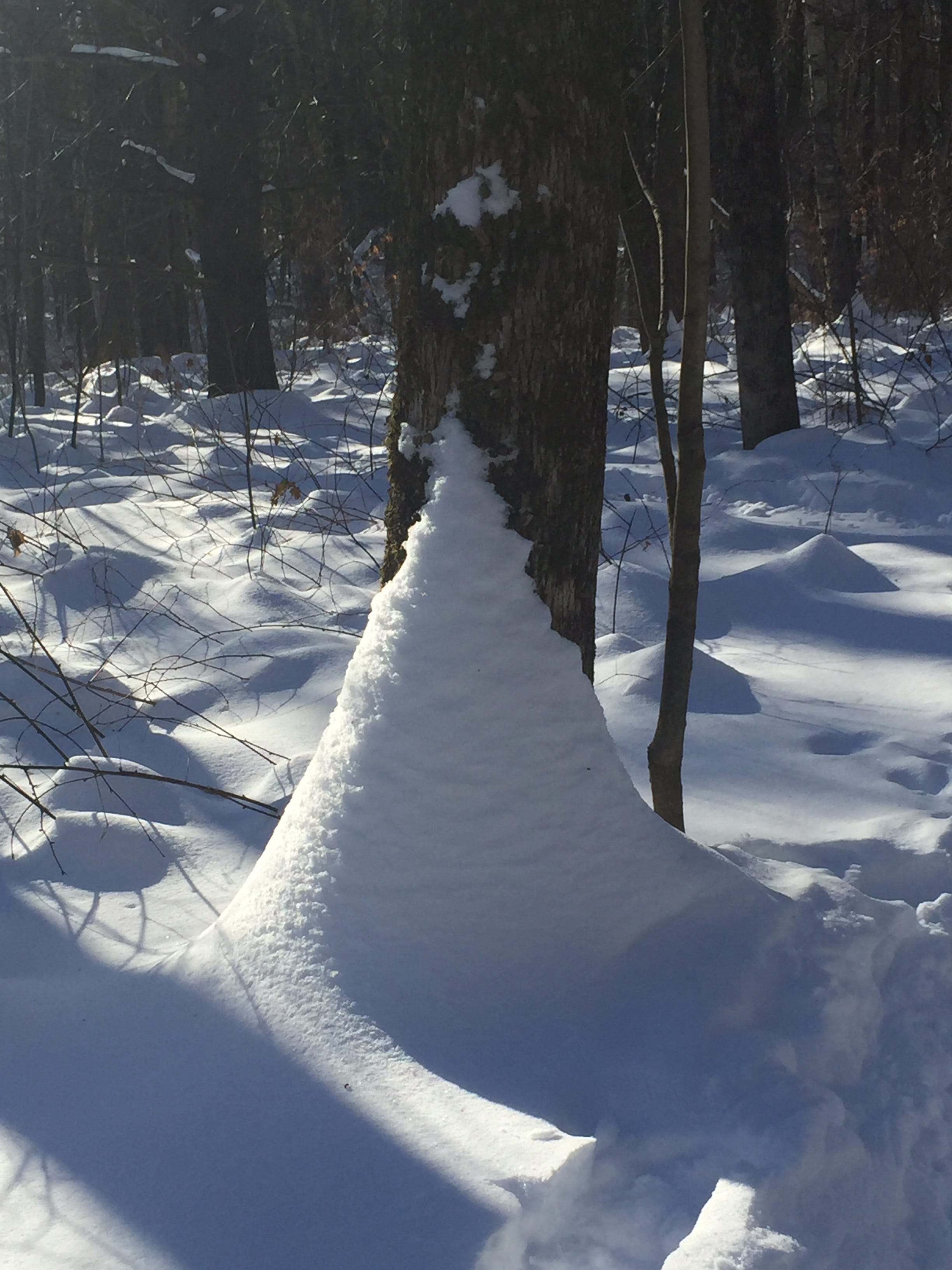
Nature’s handiwork
What I relish about AI is how wholly, essentially useless it is in “interpreting” one of the most glorious things (outside of love) a human can experience: The natural world.
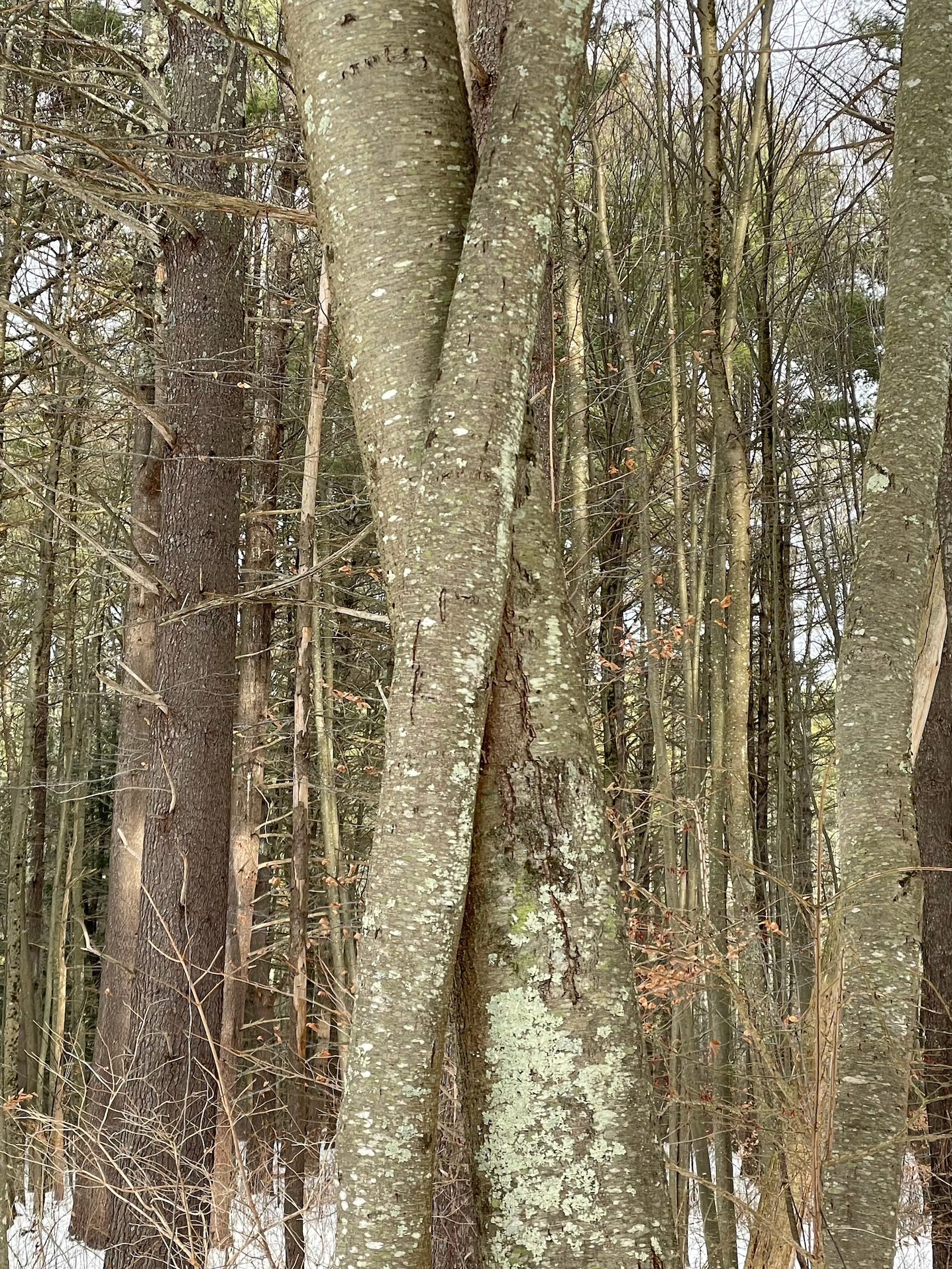
AI may *think* but it is soulless, bereft of reverence. It cannot feel the joy we do in Nature’s spirit world. Engaging with the natural world marries human sensory and visceral—physical, mental and emotional—responses. My experience of that world includes regarding trees as sentient, and believing that those shown here chose to nuzzle each other for life…I imagine that some sort of inner knowing caused them to seed side by side.
We share this communion with other creatures: a dog’s delight in bounding into snow or a lake; a bird’s loss of gravity as it flies into the sky; the sheer abandon of a whale breaching. AI cannot replicate the reverence of such states and at a certain point, is pointless in the wilderness. For millennia humans crossed oceans by reading stars and traversed vast terrains with a compass. Not so today. The concept of asking a machine incapable of feeling wonder and awe to navigate Nature for you via GPS is not only dispiriting but in off-grid wilderness, inadvisable. By the beginning of this December, Vermont’s Stowe Mountain Rescue team reported unprecedented early backcountry ski terrain access, and an equally unprecedented number of early season rescues, which the Rescue Chief blamed on “social media and impulsive behavior,” citing TikTok videos of whooping—often inexperienced—skiers in deep powder. His advice to them, “Don’t go if you don’t know where it ends up” is the opposite of poet Antonio Machado’s “Wayfarer, wayfarer, there is no path. Your steps make the road.”
But Machado’s nonlinear trusting of an unpredictable outcome is germane to the creative life, where the joy is in the making. Artists require what can be understood as something highly underrated in America—indolence, a state of suspension, a limbo. This sort of “daydreaming” integrates self and body; devices separate them. The machine “brain” can’t reproduce or make; it replicates, simulates, synthesizes. I think of the passivity of Robot Puppies, and the “digital artist” Beeple’s hideous humanoid dogs, more simulacra than facsimiles, and their transactional nature, the opposite of what is real and free.
We humans possess the power to create our own experience. Courbet’s essential art viewing equation—uniting the work, its maker and you, your experience—redefined the understanding of what art is, and does. I apply this to Nature, where the triangular equation is composed of a tree someone contemplates and the collaborative construct, a type of communion, between the two resulting from the viewer’s acknowledgment, appreciation, and seeing. I participate in this relationship not consciously but intuitively, through a sensate modality that responds to an environment such as the forest.
In reverting to such reverie in these unholy cold, although glorious, woods, I flee from my head, into the particular consciousness of the sensate world. AI cannot experience the delight of such an *aimless” pursuit. It cannot know the joy of the act itself without the guarantee of an inherent, definable outcome. It does not understand the essence of Machado’s advice. Or how Ursula Le Guin describes starting her day at 5.30am with an agenda of “wake up and lie there and think.” Yes, AI can think but that’s not to what I think Le Guin refers, which is more like daydreaming.
AI cannot abide getting lost, and while directions are helpful, the exclusive use of devices to navigate bastardizes experiences such as the de facto anointment of visiting Venice: getting lost in its alleyways, I piccoli viccoli. If we bury our heads in a tiny machine and faithfully follow its instructions to a dinner reservation or museum or a Murano visit we’ll arrive on time but risk missing every detail of this ever exquisite and increasingly sinfully over-visited city. We won’t discover its delights and surprises: a narrow street opening into a piazza with children playing and bouncing balls, a vintage jewelry shop brimming with exquisite one-of-a-kind pieces, shops with Fortuny finery, the Fortuny Museum, wine bars where cicchetti and an ombra (sundowner) communally mark the winding down of a day. The labyrinth of the city’s winding paths, its crooked corners are something someone accustomed to precise digital directions may find exasperating and anxiety-producing—but also an opportunity for adventure if you find yourself in a neighborhood with no relationship to your destination coordinates.
Of course coincidence must slide in and it does so by way of opening an email to an Ursula Le Guin poem. Something in it sparks a memory of another poem I then want to retrieve. Googling a few lines of it my request is co-opted by AI which responds

I find it sad that the machine assumes, construes (I don’t believe it can imagine) a trimverate—me, the poem, the machine—relationship here. When I visit the trees the experience is free and unfettered. But is it “mutual”? Do they care? I accept that the answer remains a mystery but it’s one with which I am content to abide.
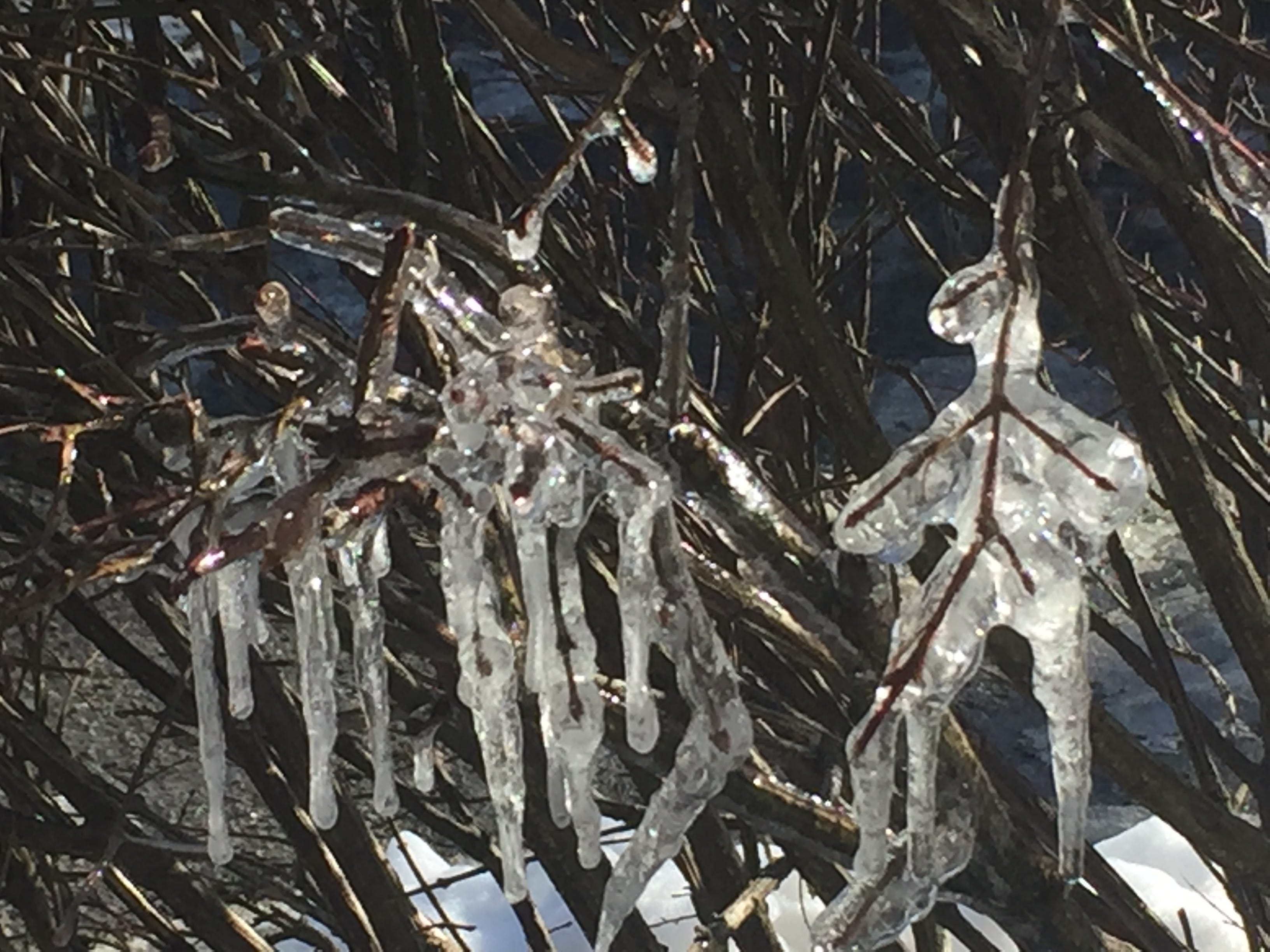
Ice aliens
Your sage concepts warm my soul on this chilly morning in Florence.....which misses your vibrant presence.
Provocative and enticing, opens a door to important and fascinating questions. And I definitely do not trust an ai that says, “The feeling is mutual.” The photos beautifully illustrate the thoughts.